
Bursa Malaysia Just Changed the Game. Are You Playing to Win or Just to Survive?


It is 2026. The sustainability lead of a Kuala Lumpur listed company is staring at an almost-finished annual report. Then an email lands from one of the company’s largest institutional shareholders. It asks one question: can you show us the evidence behind your emissions figures, the same way you would for any number in your accounts?
The room goes quiet. That quiet is the sound of the rules changing in Malaysia.
What actually changed at Bursa Malaysia
For most of the last decade, sustainability reporting here was mainly a storytelling exercise. A narrative, a few charts, a statement of intent. That era is closing.
In September 2024, Malaysia introduced the National Sustainability Reporting Framework, known as the NSRF. In December 2024, Bursa Malaysia wrote it into the Main Market and ACE Market Listing Requirements. In plain language, sustainability disclosure now rests on the same kind of formal standards that govern financial reporting, called IFRS S1 and S2. S1 covers the sustainability risks and opportunities that can affect your business. S2 is about climate, including your greenhouse gas emissions.
The shift is easy to state and hard to live up to. Your ESG numbers are now expected to be as solid as the numbers in your financial statements.
The deadline is closer than most boards think
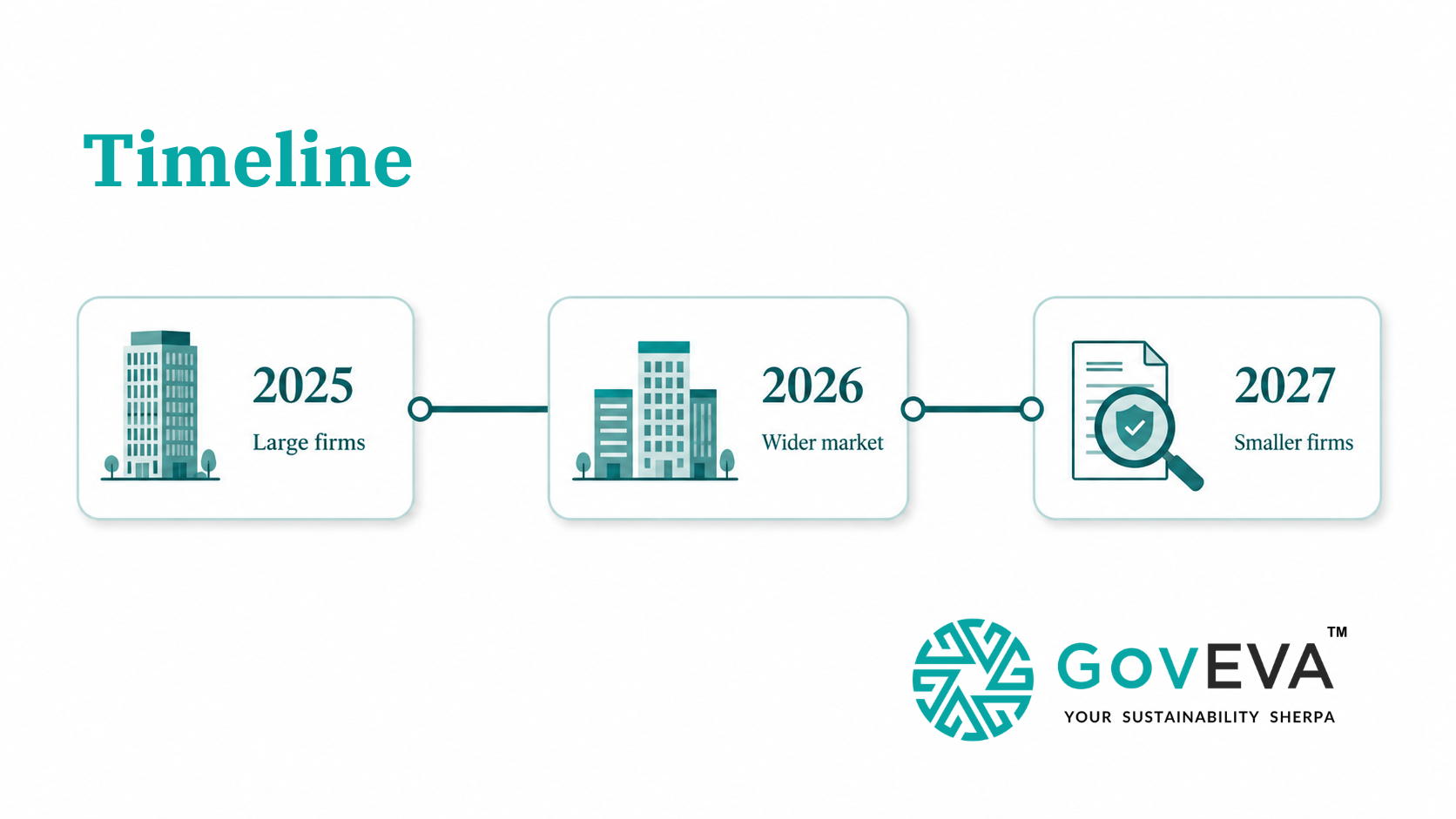
This is not a someday rule. It arrives in waves, by company size.
The roughly 130 largest Main Market companies, which together represent more than 80 percent of Bursa Malaysia’s market value, started with financial year 2025. Their first reports under the new standards land in 2026. That is this year. The rest of the Main Market follows for the 2026 financial year. ACE Market companies and large private firms enter from 2027.
Then the bar rises again. From 2027, those largest companies must obtain independent, reasonable assurance on their Scope 1 and Scope 2 emissions. That is the same kind of external check an auditor brings to a set of accounts. Reports are filed through the ESG Reporting Platform on Bursa LINK, so there is a single, visible trail.
Seen in the round, this is the sharp end of Malaysia’s broader ESG transition, where disclosure stops being a story and becomes a system. If your company sits anywhere on the Main Market, the question is no longer whether this affects you. It is how ready you are.
Why the spreadsheet approach quietly fails
Faced with a deadline, the natural reflex is to do more of what worked before. More people, more spreadsheets, one more file before the cut-off. It feels productive. It is also where the risk hides.
Spreadsheet sustainability is a governance problem dressed up as a reporting task. Dozens of files and no single source of truth. Your best finance and operations people pulled away from real work to chase versions and copy figures by hand. An audit trail that looks fine until an assurance provider leans on it, and then folds.
When emissions data has to survive the same scrutiny as financial data, fragile foundations stop being an inconvenience. They become a credibility risk that investors can see.
What winning looks like
The companies that come out of this stronger will not be the ones that write the prettiest report. They will be the ones that wire sustainability into the systems that already run the business: capital allocation, supply chain, risk. When that happens, the annual disclosure stops being a scramble. It becomes a by-product of how the company is already run.
Picture it from the other side. Instead of a yearly panic, your reporting is close to ready all year. Instead of guessing which green investments are worth it, you can see the financial and environmental return before you spend. Instead of treating your supply chain as a black box, you have a live view of where the real risks sit.
Where agentic AI changes the maths
This is the part that used to be impossible at a sensible cost, and is now within reach.
GovEVA’s agentic AI does the heavy lifting that used to fall on your team. It reads across your source systems, assembles a near-complete draft of your Bursa Malaysia disclosure with every number traceable to where it came from, and flags the gaps before an auditor or an investor does.
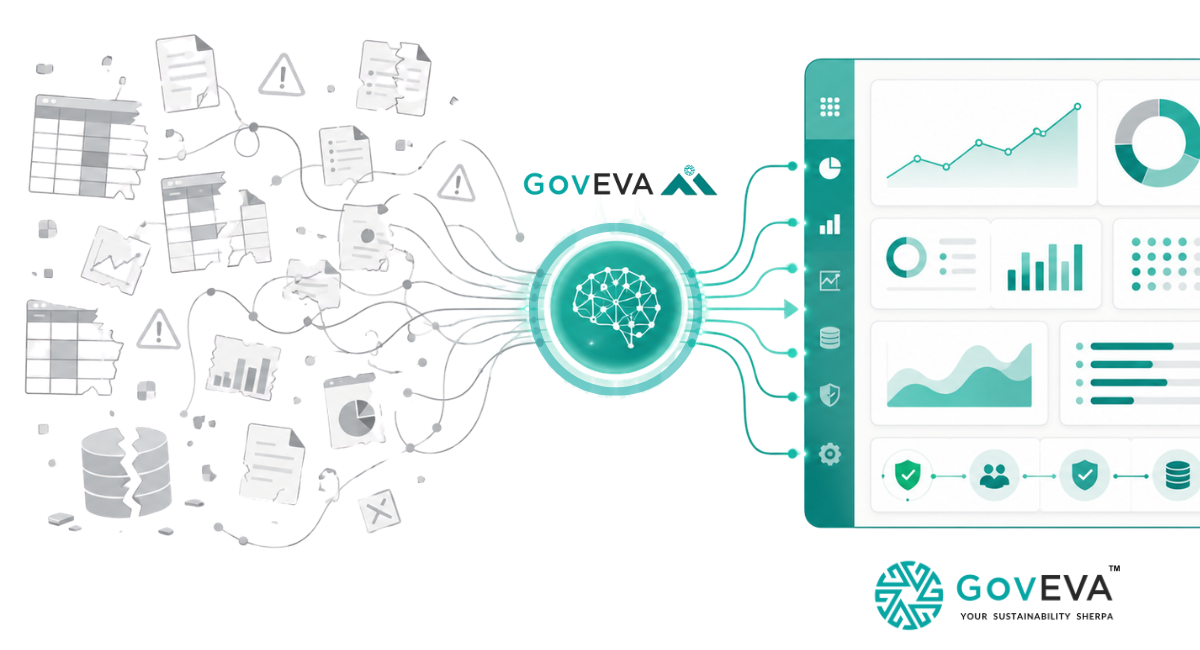
For the climate numbers specifically, it helps you measure Scope 1, 2, and 3 emissions with an evidence trail attached. Your people stop being data clerks and go back to judgment: deciding what the numbers mean and what to do about them.
That is the difference between disclosure data and decision data. One satisfies a deadline. The other helps you run the company.
What this means around the boardroom table
- For the CFO: reliable, assured ESG data is what unlocks green financing, reassures institutional investors, and exposes the operational waste quietly costing you money.
- For the CEO: this is about building an organisation that is resilient by design, one that creates value and can prove it.
- For the head of sustainability: this is the moment to move from storyteller to operator, with the hard numbers to show the return on what you have championed for years.
Your next move
Bursa Malaysia has drawn a clear line. You can treat the NSRF as a burden to survive, or as the push you needed to build something stronger.
This is the climb GovEVA was built for. We bring the agentic AI platform that becomes the nervous system for your ESG data, and the people who have made this climb before. That is what a Sustainability Sherpa does. We help you read the terrain, avoid the obvious falls, and reach the summit of compliance with your flag planted as a leader, not a straggler.
The deadline is already here. The only choice left is whether you report, or lead.
Ready to map your path? Talk to a GovEVA advisor for a strategic session.
Frequently asked questions
What is the NSRF in Malaysia?
The National Sustainability Reporting Framework is Malaysia’s framework for mandatory sustainability disclosure, introduced in September 2024. It adopts the global IFRS S1 and S2 standards and is being phased in for Bursa Malaysia listed companies and large private companies.
When does Bursa Malaysia’s sustainability reporting take effect?
It is phased by company size. The largest Main Market companies, with market capitalisation of RM2 billion or above, began with financial year 2025 and first reports in 2026. The rest of the Main Market follows from 2026, and ACE Market companies and large non-listed firms from 2027.
What are IFRS S1 and S2?
IFRS S1 sets out general sustainability-related disclosures, covering the risks and opportunities that can affect a company’s value. IFRS S2 focuses on climate, including governance, strategy, and Scope 1, 2, and 3 greenhouse gas emissions.
Is sustainability assurance mandatory in Malaysia?
It is being introduced in stages. From 2027, the largest companies must obtain reasonable assurance on their Scope 1 and Scope 2 emissions, bringing ESG data closer to the rigour of audited financial statements.
How can companies prepare for Bursa Malaysia ESG reporting?
Move sustainability data out of scattered spreadsheets into a single connected system, build an audit-ready evidence trail, and use agentic AI to draft disclosures and surface gaps early. This turns annual compliance into an ongoing, decision-useful capability.
Ready to Take the Next Step?
You’ve explored the strategies, now let’s put them into action. With GovEVA as your ESG Sherpa, compliance and sustainability become a clear, achievable climb.
Start Your ESG Journey →